


Archaeological Museum
MUDI – MUSEO DIOCESANO DI ALBA
 included
The MUDI in Alba: an immersive journey through archaeology and technology
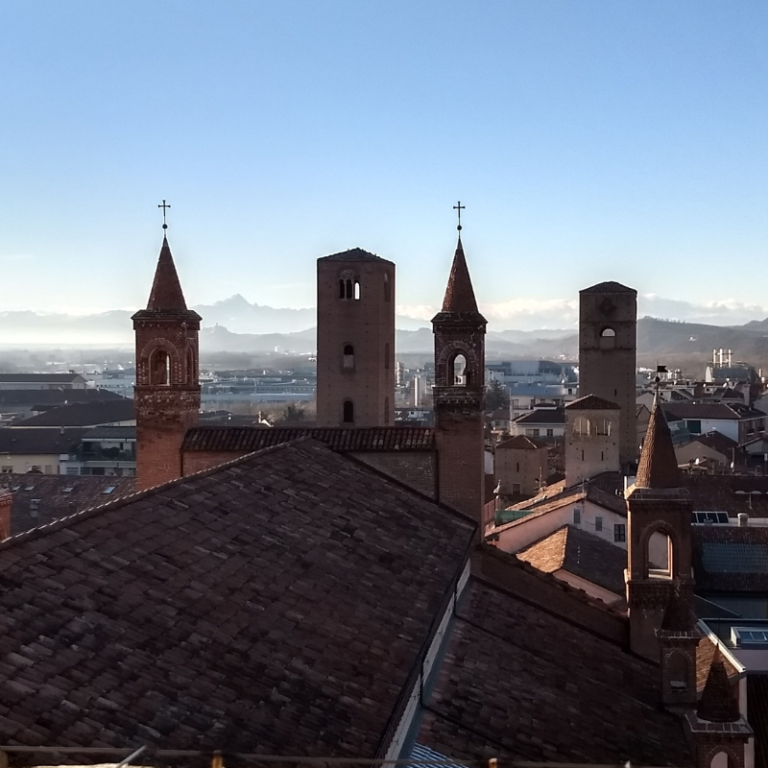
From 2012the Diocesan Museum (MUDI) tells the story of the city of, which dates back several millennia Dawn and the fascinating stages of construction of the Cathedral of St Lawrence. The tour winds its way through the underground passages beneath the Cathedral, where visitors can admire the remains of the’Roman public space – site of the civil basilica dating from the 1st–2nd centuries AD – and the the first church dating from the 6th century equipped with a baptismal font. The journey through time continues through these transformations Early medieval and Romanesque, until you reach the splendid panoramic view of the city view through the mullioned windows of the medieval bell tower, which houses an even older bell tower. The MUDI also houses a rich a lapidary exhibition in the Crypt of St Peter’s, which houses a diverse collection of stones and marbles from the Rectory, the Bishop’s Palace and recent archaeological excavations.
The new Digital Stories
Following a major operation to conservative restoration of the underground archaeological site, which concluded in spring 2026, the Museum has completely revamped its visitor experience thanks to the project Digital Stories at Mudi. The history of ancient Alba Pompeia and the medieval cathedral is brought back to life today through cutting-edge technologies, multimedia applications, video storytelling and striking video mapping.
The route begins right inside the 16th-century cathedral – can be visited alongside its subsequent renovations Baroque and 19th-century – thanks to a informative touchscreen monitor. At the museum entrance, visitors are greeted by a A modern Virgil featuring the digital likeness of the well-known cartoonist Boban Pesov, whilst along the underground route it is possible to activate via QR code new audio guides and audio stories (available in Italian, English and German) directly from their own smartphone.
This perfect synergy between scientific rigour and innovation turns the visit into a’a fully immersive and interactive experience. The museum and the archaeological site are open to the public in autonomy thanks to new teaching and multimedia resources, or accompanied by a specialist guide.











 Digital Assistant