


Art Museum
Museo d’Arte Sacra di San Francesco “Paola Benzo Dapino”
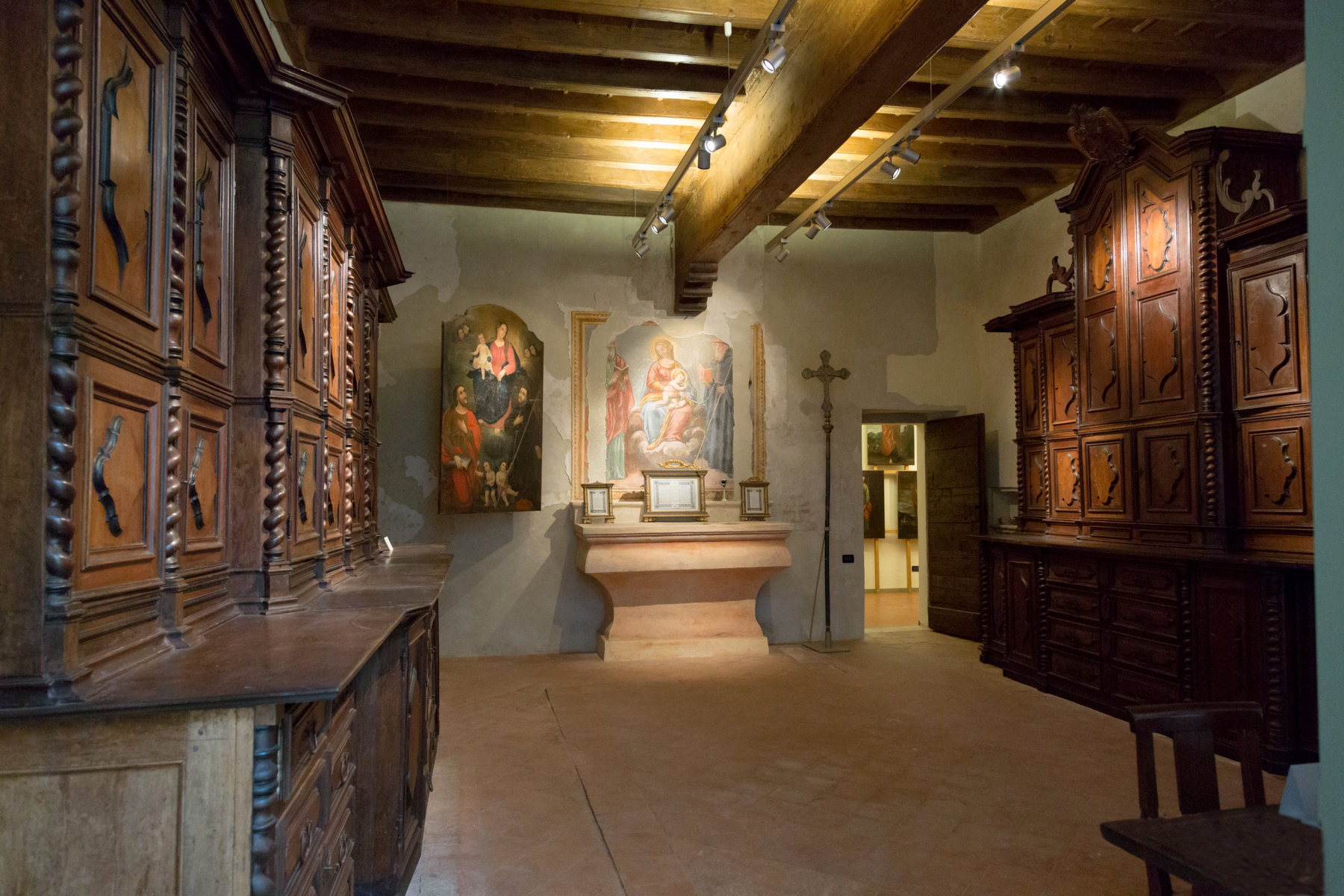
The Museum is divided into three exhibition halls - the Chapter House, the Sacristy and the Quadreria - connected by a wide metal and glass vestibule.
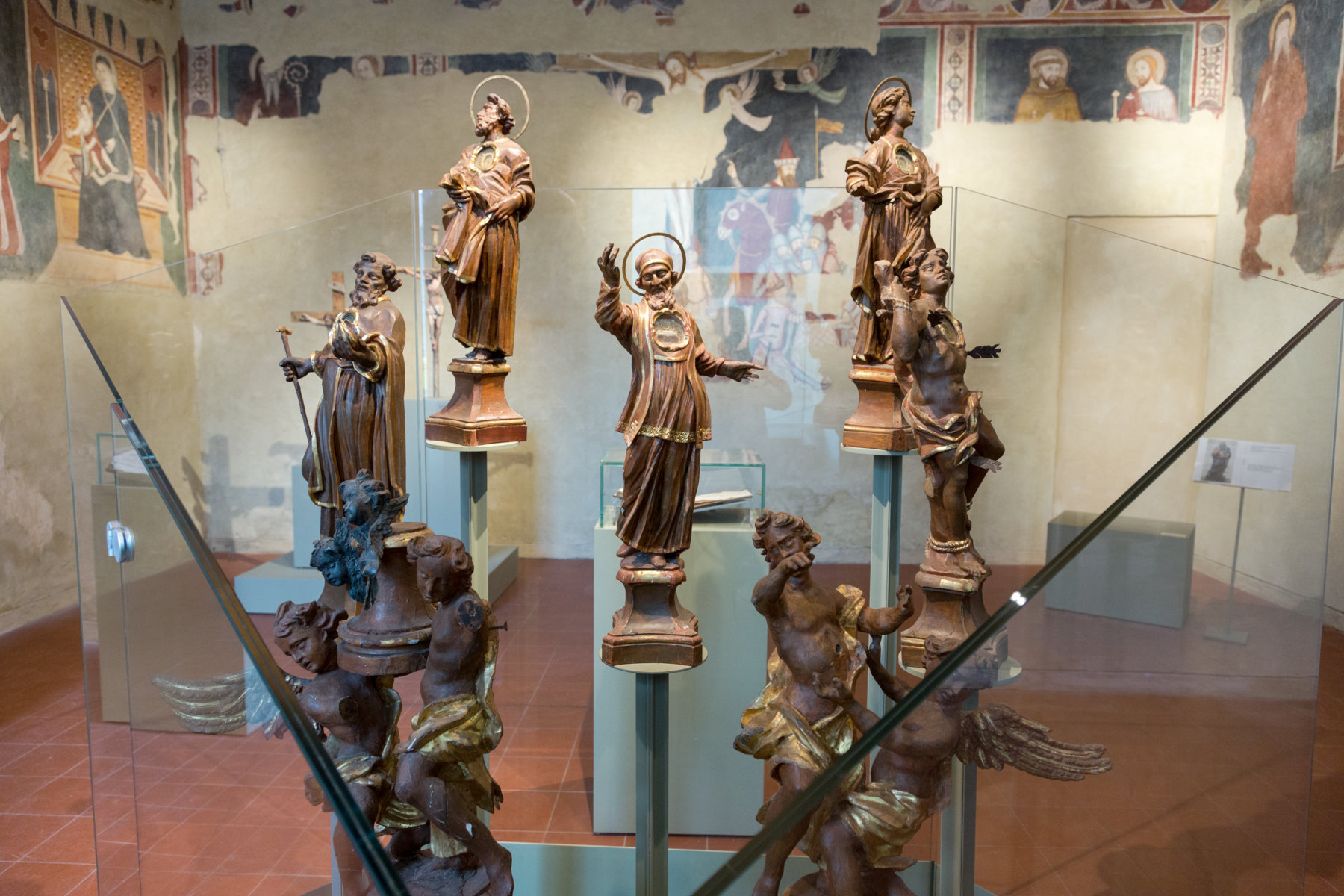
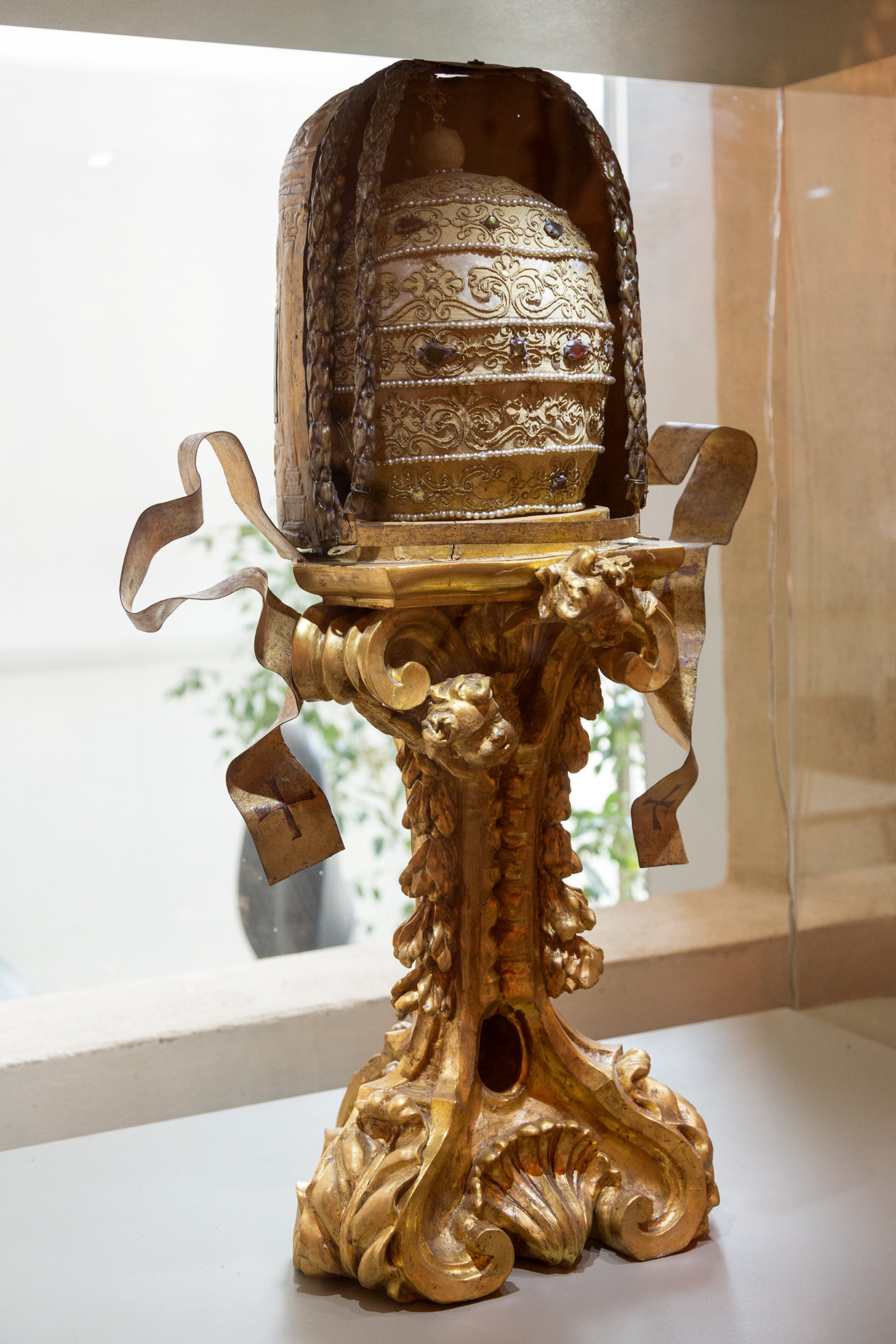
In the Chapter House you keep a 14th-century pictorial cycle decorating the walls, flanked by display cases containing painted and gilded wooden reliquariesthe Funeral shroud of Pope St Pius V, a Antiphonary of 1695, a membranous book datable between 1710 and 1713, two polychrome wooden crucifixes and one 16th century statue of St. Anthony Abbot.
La Sacristy, characterised by the original wooden coffered ceiling from the late medieval period, houses a fresco of 1532, two large wooden wardrobes of 1713, a masonry altar surmounted by a fresco attributed to the Monevi (1713) e precious 18th-century silver reliquaries.
La Quadreria collects fourteen paintings of the Stations of the Cross (1796) by the Bolognese painter Pietro Fancelli, seventeenth- and eighteenth-century paintings depicting Apostles, the 16th-century altarpiece of the Virgin and Child between St Francis and St Blaise and one 17th-century wooden sculpture of Ecce Homo.
The Museum is housed in a wing of the’Old Franciscan Convent, linked to the Church of St Francis (13th-14th century), which preserves important cycles of frescoes e paintings on canvas.








 Digital Assistant